It’s 2019 and the world is more technologically advanced than ever… and it looks like there is no stop to this advancement in the near future. One of the last few dominos to fall into this technological age is baseball. It is safe to say that technology has taken over baseball these past few years and it has caused many differing opinions amongst all who are in the sport. I have been at many different levels of baseball over the years and have heard virtually all the opinions there are about this topic. The first to adapt to this fast change was the private sector/ facilities. Coaches at various levels were intimidated by all the new technology being thrown around- in my opinion. I can’t tell you how many times that I’ve heard, “I can’t stand this weighted ball crap, all it does is get kids hurt.” or “I hate how people are teaching that launch angle swing nowadays.” From my experience, this is far from the truth and it is these close minded coaches/mentors that will soon be phased out of the baseball world…at all different levels. The integration of baseball technology is very well known by all people in the sport, but I feel as if there is a part of this discussion that is being overlooked. Some coaches are getting pushed out of baseball because they do not know the proper technology and data points needed to be successful at this game in today’s day in age, but that is not the only reason. The reason there has been such a shuffle of coaches across all levels is that they lack what we call the “growth mindset” or even more simply put, a more approachable personality. I will be tackling this topic in the rest of this conversation.
This past year I spent a lot of my time and efforts with the New York Yankees and coaching at St. Petersburg College. At both places, I was surrounded by people with the growth mindset. To be able to work at two different programs that both have the growth mindset this sport needs, was outstanding for my growth as a coach. One of the coaches I had the pleasure of working alongside of at St. Pete college, Sean O’Connor (everyone calls him OC), was one of the best people I’ve met in this industry. He’s as old school as it gets, but he has such a good understanding of how to coach the current 18-22 year olds- which comes from treating everyone like they’re family. This is something that is hard to find when it comes to not only baseball but just relationships in general.
Coaches like this will always have a spot to coach at because caring about your players is one of the most important aspects of coaching. When it comes to relationships as a coach, I learned more this past year from OC than I had in the previous 3 years of coaching. We obtained a Flightscope late in the season and we were pretty thrilled about this acquisition. This is one of the leading data tracking units for amateur baseball. Coach Beckman, Head Coach at St. Petersburg College, and I had a base level knowledge of how to use this information to help better our players, but OC was not too familiar with the data point. One of the first things he wanted to do was pitch himself off the machine so he could better understand what the data points meant. I do not know many coaches that would take this type of initiative to pitch at an older age to understand the data points of spin rate, direction and all the other important information. I will forever be thankful for my time with OC and he is an example of an old school coach with a growth mindset.
I was also right in the middle of professional baseball adapting to technology during my time at the New York Yankees. I have been called upon to catch bullpens at the minor league complex for some years and I stumbled upon having the right conversation with John Kremer at the right time. John, at the time, was the head of the performance science department and needed a catcher. I jumped on the opportunity and worked on and off in the position for the last two years. During this time, the Yankees made a lot of new hires with people who had knowledge of this game changing technology. I had been following a number of these people on twitter and I was excited to see them work in person. I ended up working with Desi Druschel and Elvys Quezada, or known as Q, for the majority of my time this year. When I say working with them, I was catching bullpens and watching them go to work with players across the farm system. Watching from 60 feet and 6 inches away, I watched them use a Rapsodo unit and an Edgertronic camera. Rapsosdo is a device that measures spin rate, efficiency, axis, velocity, horizontal and vertical break. If that’s confusing, don’t worry, I was just as confused in the beginning. The Edgertronic camera is a high speed camera that captures, with extreme clarity, how the ball comes out of the pitchers hand. Using these devices, Desi and Q were able to help pitchers change their pitches for the better and even create new ones. This is where the name, “Pitch Design Session” came from.
With these two devices, they were actually able to help pitchers design a new pitch that better suits what they are able to do with the baseball. As you can see, Desi and Q are some of the better pitching coaches that you can find in the new age of baseball. These abilities are great but again, I do not think that this is what separates them from the pack. If you cannot communicate effectively with another human being then how are you going to get this message across? Desi and Q were phenomenal communicators and even better people. Not only do I enjoy writing about these two coaches because of how they are at the cutting edge of baseball, I enjoy writing about them because they are just really good people. The Yankees do a phenomenal job at hiring solid and whole hearted individuals. There were so many coaches and support staff that treated me just like they would Aaron Judge and that says a lot about the organization as a whole. There are many factors that go into the Yankees long time success, but I think being a quality person has a role in this. There were plenty of times where Desi and Q took the time to explain to me the different aspects of developing a pitcher. I was just a junior college coach who could catch bullpens at the complex, and they still took the time to impart their knowledge upon me.
I have had some arm issues in the past and some days it’s tough for me to throw a baseball accurately. Q saw me struggling and took me aside to give me some tips on how to navigate through my problems. In my experience with these throwing problems, most people just like to say “Oh, that kid has a messed up arm.” and leave it at that. Q took it upon himself to step aside and help me, because he saw me struggling. It’s little moments like this that he probably doesn’t even remember, but how he treats those around him is what separates him from the pact. I am forever grateful for my time with the Yankees and they are an example of how you must be an elite person before you can be an elite coach.
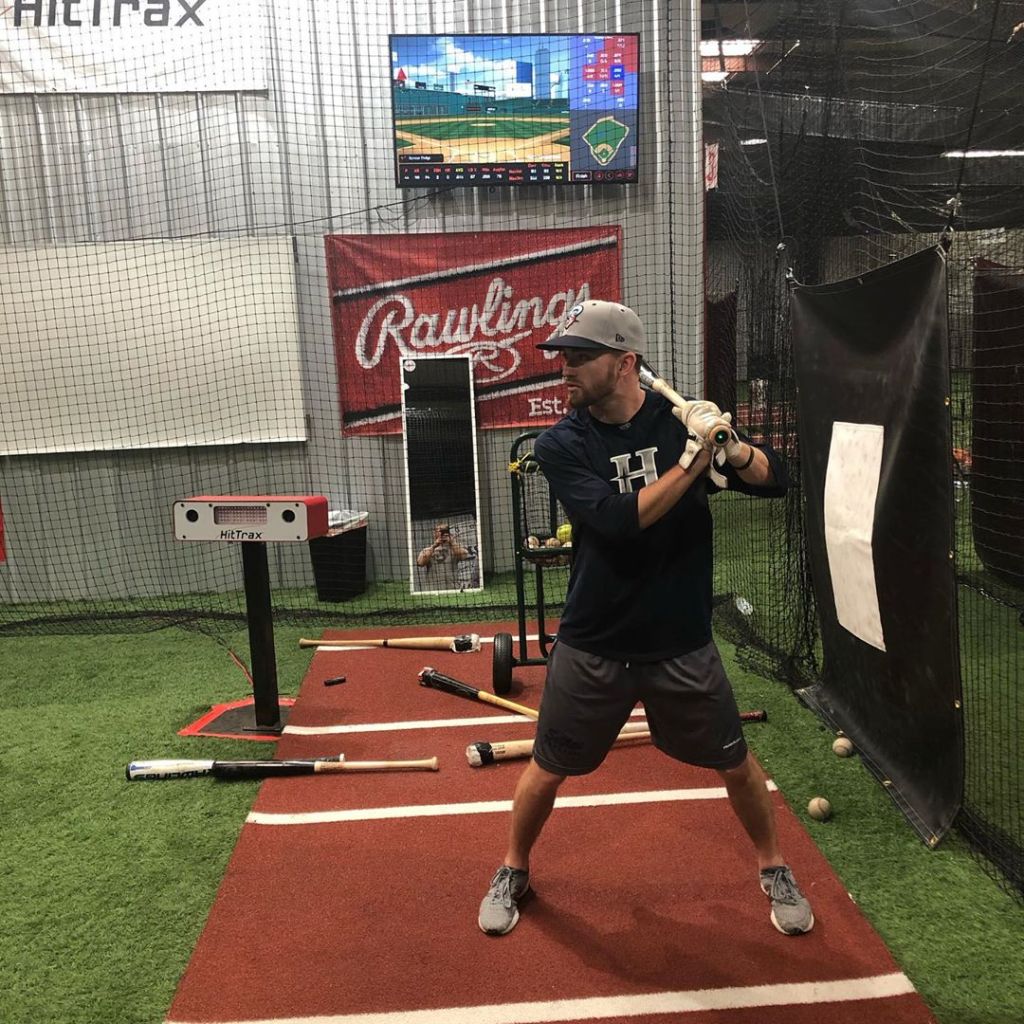
After my time was done with the Yankees, I headed on up to Newark, Ohio where I was the head coach of the Licking County Settlers. I went in with some ideas on how I was going to give them the best player development experience possible. I was excited because I had been researching and talking to coaches about the program I was going implement. You can see in my instagram posts (@TJWharton21) that one of the first programs I was going to apply was a bat speed program using Diamond Kinetics and Hittrax. The bats used were old wood bats with pennies taped to the end of the bat, Old Hickory bat that has a slot to embed the Diamond Kinetics sensor and a youth metal bat. There are better options to use such as the axe bat system…but this method is much more affordable. We started with doing the program 2-3 times a week. The program was great at first but then grind of summer ball started to really hit. The guys were becoming run down and I saw the program was not benefiting the players enough to take away from their recovery. The main problem with data is that coaches often don’t retest it. If you test data once and then never use it again, the player never learns about data or if they are getting any better. I knew that this may be a problem, but it is the right move to make with how crazy the Great Lakes league schedule is.
I found that switching my efforts to helping my players focus on what type of players they are was more beneficial to their development. Maximizing their strengths and having the player understand what their strengths actually are, is what I find the best way of developing over a short period of time. I failed with the bat speed program but changing the focus as the summer went on lead to our great success. It could have been possible to keep the program, but I decided that it was the wrong move to implement it in the first place. Using the experience with the bat speed program I have a clear vision of what I want our player development program to look like for my next coaching position at Maryville College. The data is great and will be a big part of our program but the personal relationship will be the biggest portion. If you cannot reach the player on a personal level then you’ll never be able to change their success on the field. I love learning about all this new information but what I love the most is challenging myself everyday to be a better person and a better coach. It doesn’t matter if you’re like OC, who is going to make fun of me using a term like “growth mindset”, he is an elite communicator which makes him and elite coach. This growth mindset is the key that is sweeping the baseball community…and it’s making coaches better across the world.
 CONNECTING THE DOTS BASEBALL
Leave a comment